|
The movement of Transcendentalism completely redefined the relationships between nature and man. Transcendentalism emphasized the importance of the individual and, unlike the earlier Romanticism, developed in America during the 1830s to 1840s. In addition, Transcendentalism had an added component of religiosity. Believing in an "Over-soul," Transcendentalists thought that there was a vital universal force made up of all souls; this force was believed to transcend individual consciousness. Not only did Transcendentalists appreciate nature, but they also thought that nature and self-consciousness connected humans to God. While the movement was mainly in the literary realm, the same ideas extended into the art of the era.
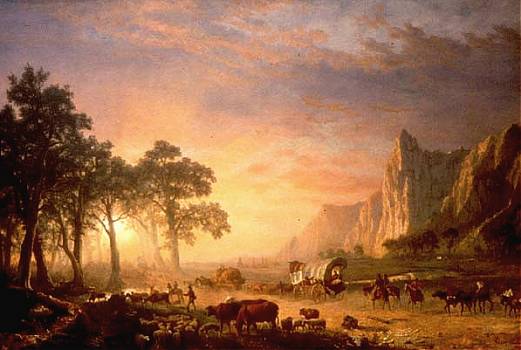
The Oregon Trail Albert Bierstadt, 1868
|
|
The ideas of the Transcendentalists are evident in much of the art of the 19th century. Here are various examples of works that embody the themes of Transcendentalism.
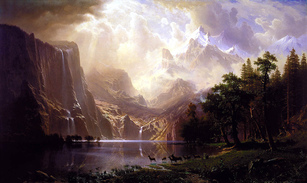
Among the Sierra Nevada Mountains, California Albert Bierstadt, 1868
|
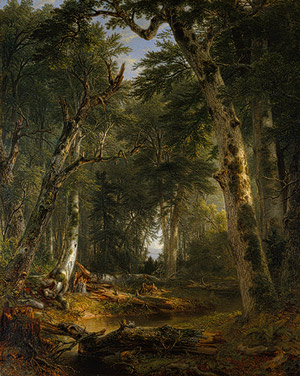
In the Woods Asher B. Durand, 1855
|
Major Artists
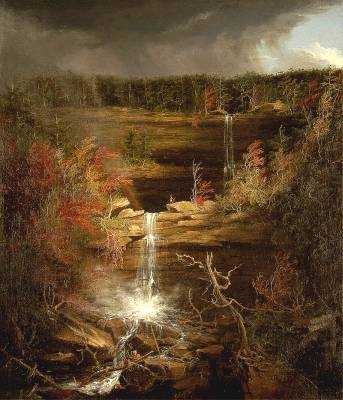
The Falls of Kaaterskill Thomas Cole, 1826
|
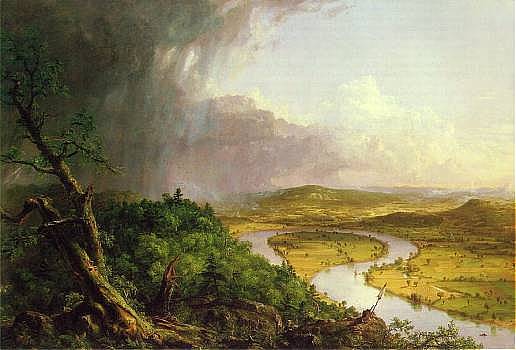
View from Mt. Holyoke, Northampton, Massachusetts, after a Thunderstorm (The Oxbow) Thomas Cole, 1836
Themes in the artworkThe painting of landscapes was prevalent during the 19th century. This was a drastic change from the popularity of portraiture during 18th century in America. The new depictions of natural beauty reflected the growing appreciation of Americans for the untamed and wild appeal of the terrain. The paintings tended to show awe-inspiring scenes of the wild. Almost all of these works shown here incorporate water. In some cases, the water is calm and tranquil while in other cases, the water is mighty and powerful. The way that the painters portray nature as dynamic and spirited reflects their deep connection with elements of nature. The scenes often seem surreal and hint at the presence of a higher power with heavenly, billowing clouds and natural lighting that seems to glow.
|
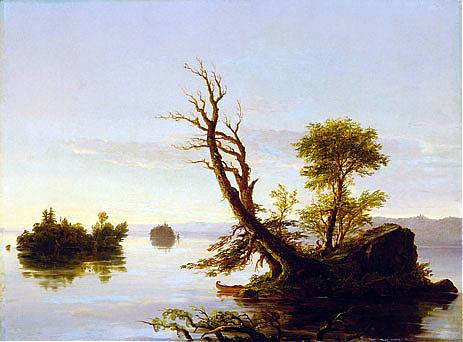
American Lake Scene Thomas Cole, 1844
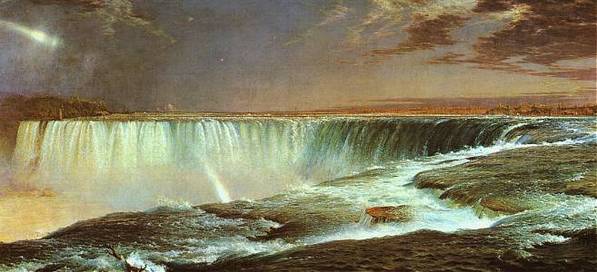
Niagara Falls Frederick Church, 1857
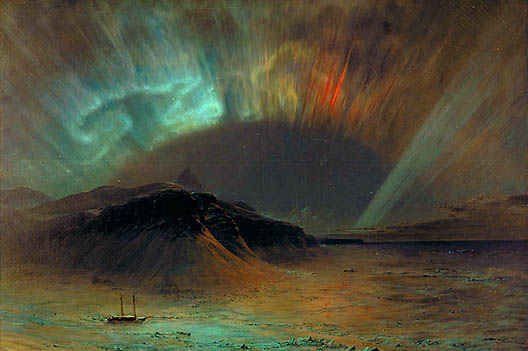
Aurora Borealis Frederick Church, 1865
|
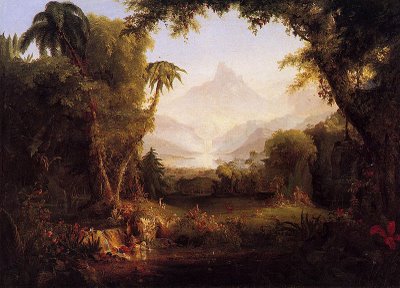
The Garden of Eden Thomas Cole, 1828
|
__________________________________________________________________________
Page made by Michelle L.
Click on the pictures for links to sources
See Works Cited page
Page made by Michelle L.
Click on the pictures for links to sources
See Works Cited page
